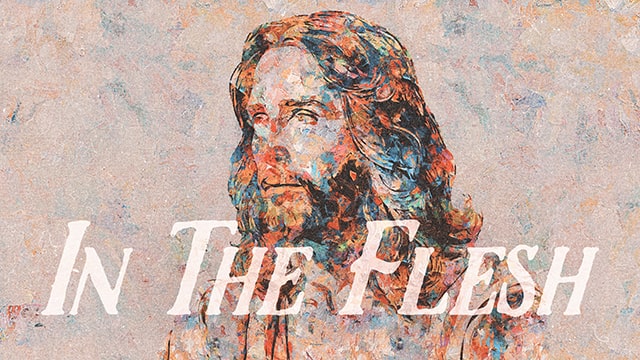


In The Flesh - John 1:6-14
Learn About The Spiritual Gifts From God That Jesus Brought.
Dan Hamel
Dec 17, 2023 34m
Have you been struggling to grasp the true gift of Christmas this season? Learn about the spiritual gifts from God that Jesus's birth brings us and how these gifts impact our lives. The scripture of John reminds us of the greatness of Jesus and the gifts He brought us. Video recorded at Indianapolis, Indiana.
Tags
spiritual gifts from god spiritual gifts holiday Christmas merry Christmas Christmas story worship Jesus church Jesus Christ praise and worship worship god christian what is worship praise worship together christian worshipMore From This Message
In the Flesh Dan Hamel John 1:9-18 December 17, 2023
A few years ago, a nationally-known restaurant chain ran a contest for their employees and told them that whoever sold the most food and drinks over a one month period of time would win a Toyota. Jodee Berry put in extra hours, worked as hard as she could, and won the contest. She was so excited to see what make and model of car she had won. You can imagine her disappointment when this was the toy Yoda she received.
Her company thought it was a fun prank. She sued them. No one wants to be caught off guard like that. As we prepare for Christmas, there are a lot of things we don’t know about yet: Will we get our first snow of the year and have a white Christmas? What presents will we get under the tree? What relatives will show up? But one thing we can know for sure: this time of the year is so special because of it is Jesuscentered.
Let’s review what we learned last week:
• Jesus o Was in the beginning o Is the word o Is with God o Is God.
o Is the Creator o Is the Life. o Is the Light.
The first paragraph of John 1 contains seven truths about the identity of Jesus—this is who he is! Today, as we finish the rest of the introduction, we are going to learn—you guessed it—seven more truths about what Jesus has done for us, and we are going to see how we are challenged to respond.
The true light that gives light to everyone was coming into the world. He was in the world, and though the world was made through him, the world did not recognize him. He came to that which was his own, but his own did not receive him. Yet to all who did receive him, to those who believed in his name, he gave the right to become children of God—children born not of natural descent, nor of human decision or a husband’s will, but born of God. The Word became flesh and made his dwelling among us. We have seen his glory, the glory of the one and only Son, who came from the Father, full of grace and truth. (John testified concerning him. He cried out, saying, “This is the one I spoke about when I said, ‘He who comes after me has surpassed me because he was before me.’”) Out of his fullness we have all received grace in place of grace already given. For the law was given through Moses; grace and truth came through Jesus Christ. No one has ever seen God, but the one and only Son, who is himself God and is in closest relationship with the Father, has made him known. (John 1:9-18)
These are some of the richest words, the most detailed descriptions anywhere in the entire Bible about what Jesus has done for us. Let’s jump in to study them a little deeper.
1. Jesus brought light to us. The scriptures tell us that the world was stumbling in the darkness right up until Christmas morning, and then “The true light that gives light to everyone was coming into the world” (John 1:9). The light of Jesus leads us out of darkness. A few days ago, our four-year-old boy came running into our room around 4:00 AM, crying as loudly as possible. We staggered awake and said, “Hudson, what is it? Are you ok?” He replied, “I had a bad dream!” “Oh no. What did you dream about?” “I dreamed that Mommy and Addie were eating a pizza, and I didn’t get a slice.” Fortunately, my four year old is still sheltered. He doesn’t know what real injustice looks like. He doesn’t know about what’s happening in Ukraine and Israel. He doesn’t know about mass shootings. He doesn’t know about people losing their lives to a drunk driver or suicide. He doesn’t know about corruption in politics, anxiety, depression, or addiction. Sadly, as we grow up, we learn about the darkness of the world. Jesus came as the true light, and his light shines bright enough to illuminate truth and righteousness for everyone in the world.
2. Jesus dwelt among us. Through the incarnation, during Christmas 2000 years ago, Jesus left his home in heaven to come and live with us. John tells us, “The Word became flesh and made his dwelling among us” (1:14). One of my favorite scholars who has written on the gospel of John isGrant Osborne. Listen to what he has said about this verse: “In my opinion, this is the single greatest sentence ever written in the history of human language, the deepest theological statement ever made.” Why does Grant Osborne make such a claim? When John tells us that the Word became flesh and “made his dwelling among us,” he is using a very specific, very meaningful word in the original language. He uses the Greek word “skenoo,” which is the same word used throughout the entire OT to describe God dwelling among his people. In fact, the word literally translates as “to tabernacle.” In the Old Testament, when God’s people were living in the wilderness, they constructed a very large tent. Here’s a picture to visualize it.
This tabernacle always stayed in the very center of the Israelites. They set up camp around it. This tent is where sacrifices were made. This tent is where God manifested his presence to his people. It was the most sacred object in the entire universe. The community centered themselves around this tent, around the presence of God. With that history in mind, think about how rich and meaningful it is for John to say that Jesus tabernacled among us. God is no longer manifesting his presence temporarily through a movable tent; he is coming in the flesh, he is becoming a human being, he is moving into our neighborhood. Humanity could never, even if given millions or billions of years, make our way to be with God in heaven. So God, in his loving kindness, made his way to be with us.
Some of you have seen the show Undercover Boss. This series has been on air for thirteen years! On this show, the owner or CEO of a major company shows up on the jobsite. The owner of DirecTV installs satellites. The owner of Waste Management rides along in the trash truck. The owner of Donatos slings dough and makes pizzas. These are oftentimes billionaires, who in the org chart are 100 levels above the average employee, taking off their boardroom attire to understand what it’s really like to work in the company. Imagine that, but multiply it to an infinitely greater level. The God of all glory, the sovereign one who created the world, took on flesh to live and dwell among us.
3. Jesus revealed his glory to us. We see this in 1:14: “We have seen his glory, the glory of the one and only Son.” The word “glory” can be defined in many ways, but one of the most helpful ways to understand glory is in terms of visual greatness. Most of us are familiar with what the New York City skyline looks like these days—skyscrapers everywhere. It’s the most densely populated city in America.
But 100 years ago, the skyline looked a lot different. In 1930, the Empire State Building was constructed. At over 1450 feet tall, it stood as the tallest building in the world for over 40 years. And you can see just how different it was from everything else. Ninety years ago, when you looked at New York City, there was one building that, visually speaking, displaced everything else, that captivated you, that drew you in, that impressed you, that inspired a sense of awe and wonder, an unmistakable visual display of greatness.
That’s glory. When Jesus came to us, he revealed his glory to us. He revealed just how unique and special he is, how beautiful and majestic he is. His life was weightier, substantively superior to anyone, ever.
In the Old Testament, there was a time when Moses asked to see the glory of God. Do you remember what God said to him? “If I showed you all of my glory, you’d die. You can’t handle it. My weightiness will displace you to such an extent you will unravel at the seams.” In Jesus, God mercifully reveals his glory to us in a way we can comprehend, in a way that wouldn’t crush us but rather that could captivate us. The Scriptures record 37 different miracles, such as Jesus turning water into wine at a wedding, filling up the empty nets of some fishermen to the point the boats began to sink, feeding thousands of people with two fish and five loaves with basketfuls of food left over, walking on water, calming a storm, casting out demons, healing lepers, and raising the dead. He lived a life of unceasing intimacy with God the Father and a life of selfless, sacrificial love for humanity. His words are revered by philosophers and ethicists as the ultimate gold standard. No one has done it like him. During his entire life, he revealed his glory to us, his greatness to us, his beauty and majesty, splendor and perfection at the highest possible level.
4. Jesus wed grace and truth for us. Jesus came from the Father, full of grace and truth (John 1:14). Throughout his entire life, Jesus was able to take grace and truth, love and holiness, acceptance and accountability, and weave these seemingly opposing values together in perfect harmony. Most scholars agree that these two words, grace and truth, derive from two of the most prominent attributes of God described in the Old Testament: hesed (God’s loving-kindness) and emet (God’s covenant-faithfulness). These describe God’s unparalleled grace and God’s unmatched commitment to keeping his promises, even at the cost of laying his life down on the cross. These pinnacle words used to reveal God throughout the Old Testament find the most unexpected and beautiful fulfillment in the person and ministry of Jesus Christ. Who else could look at a woman caught in adultery and in one sentence simultaneously protect her from the consequences of her sin and call her to walk away from a life of sin? Who else could look at a rich young ruler, consumed with his position and possessions, and in one sentence simultaneously identify his idols and invite him to lay those idols down so he could come and follow him?
Grace and truth—Jesus embodied them both, and that really is what we needed. The second time we see the words grace and truth paired together in this opening prologue is in 1:17 where we read, “For the law was given through Moses; grace and truth came through Jesus Christ.” John is telling us why Jesus is better than Moses. Moses came and brought the truth. He came and revealed the law and the path of righteousness. But all the truth did was highlight for us how sinful we are and how hopeless a situation we are in. Think about having a car that isn’t working. Moses brought a flashlight that shined a light on our situation, allowing us to clearly identify the problem. Identifying the problem and knowing the truth about why my car doesn’t work is good, but it’s not enough. That’s where Jesus comes in, full of grace and truth. Jesus is the mechanic who not only tells us what’s broken, but he also has the ability to fix us, to repair us, to put us back together and make us better than new. And instead of handing us a massive bill for the work, he pays the price himself. Truth and grace. Grace and truth.
5. Jesus extended perpetual grace to us. Here we have one of my favorite phrases anywhere in the Bible: “Out of his fullness we have all received grace in place of grace already given” (John 1:16). There is a word picture here of grace flowing from Jesus to us again and again and again. The most helpful image that scholars talk about is of waves on a seashore. Most of us have been to the ocean where we have watched and listened to the perpetual crashing of waves against the shore. Every moment of every hour of every day of every week of every year of every decade of every century of every millenia, wave after wave after wave after wave. The waves never stop. They just keep coming. That’s what the grace of Jesus is like in our lives. Grace upon grace. Grace in place of grace. Right when we’ve messed up again and we think God would never want us, could never want us again, like a wave on the shore, grace upon grace upon grace. In August of last year Wayne Murray walked into the gas station closest to his house and bought a lottery ticket. He scratched it off and realized he had won ten million dollars. Absolutely incredible. On December 6 of this year, just a few days ago, he walked into the same gas station, bought another ticket, and won ten million dollars—AGAIN!
He had something happen to him that was so incredible he thought it was too good to be true. Then it happened again! That’s what the grace Jesus gives us is like. Not one time grace, but perpetual grace. Grace upon grace.
6. Jesus made God known to us. Part of the incarnation, of Jesus dwelling among us, was for God to be able to understand us, but another purpose of the incarnation was for us to be able to understand him. Before Jesus, our knowledge of God was limited because God had not entirely revealed himself to humanity. In Exodus 33:20 God says, “No one may see me and live.” 1 Timothy 6:16 tells us “God lives in unapproachable light.” Because of that, there was a lot about God we simply did not know. Then Jesus came to make him known, to translate that which was invisible and help it become visible. “No one has ever seen God, but the one and only Son, who is himself God and is in closest relationship with the Father, has made him known” (John 1:18). Jesus makes God known, and he does it in the most surprising and wonderful way. Many of you have seen videos the past few years of family members coming together to give someone they love who was colorblind glasses with new technology that allows them to see color for the very first time. They put on these lenses, and they break down in tears, tears of joy, as all of a sudden, they can see colors they’ve never seen before. That’s what Jesus does for us. We look at him and we can see what God is like; we behold him and see his beauty, his love, his grace, his goodness. We are blown away beyond our wildest imaginations.
7. Jesus welcomed us into God’s family. When Jesus calls us to come and follow up him, it’s not like a coach saying he wants you to come and play for his team; it’s not like a business owner saying he wants you to come and join his company. It’s like a father saying he wants you to come and join his family, to become his son or daughter. “Yet to all who did receive him, to those who believed in his name, he gave the right to become children of God” (John 1:12). The Bible tells us that God gives all of us life, that everyone is God’s creation, but it’s when we place our faith in Jesus, when we believe in his name, that we become God’s children.
In John’s day, the most famous example of adoption was of Julius Caesar, who did not have a male heir so he decided to adopt Octavian. The moment this adoption took place, what happened? Octavian was set to become the most powerful man in the history of the world and inherit the entire Roman Empire. Status, wealth, and privilege beyond imagination, not because of who he was or the family he was born into, but because of his relationship with Caesar and the family he was adopted into. John would tell us: “You think being adopted by Julius Caesar is good? You think inheriting the empire is awesome? How about being adopted by God himself? You’re being called a son or daughter by the one who created and rules over the universe! You’re not simply inheriting an empire for 30 or 40 years; you are inheriting eternal life! And here’s the thing: this was not a last-minute adoption planned out of need. Caesar adopted Octavian because he didn’t have any sons to inherit his empire. Adoption was his plan B. But not our adoption. The Bible tells us that this was God’s predestined plan before time began. All of this is made possible by one person: Jesus Christ!
Jesus—
• Brought light to us.
• Dwelled among us.
• Revealed his glory to us.
• Wed grace and truth for us.
• Extended perpetual grace to us.
• Made God known to us
• Welcomed us into God’s family.
We get to decide how to respond! Just like when Jesus first came, we can respond in different ways.
“Jesus was in the world, and though the world was made through him, the world did not recognize him. He came to that which was his own, but his own did not receive him. Yet to all who did receive him, to those who believed in his name, he gave the right to become children of God” (John 1:10-12).
We can:
• Failed to recognize him.
• Reject him.
• Receive him.
• Welcome him.
• Find salvation in him.
Recorded in Indianapolis, Indiana.
A few years ago, a nationally-known restaurant chain ran a contest for their employees and told them that whoever sold the most food and drinks over a one month period of time would win a Toyota. Jodee Berry put in extra hours, worked as hard as she could, and won the contest. She was so excited to see what make and model of car she had won. You can imagine her disappointment when this was the toy Yoda she received.
Her company thought it was a fun prank. She sued them. No one wants to be caught off guard like that. As we prepare for Christmas, there are a lot of things we don’t know about yet: Will we get our first snow of the year and have a white Christmas? What presents will we get under the tree? What relatives will show up? But one thing we can know for sure: this time of the year is so special because of it is Jesuscentered.
Let’s review what we learned last week:
• Jesus o Was in the beginning o Is the word o Is with God o Is God.
o Is the Creator o Is the Life. o Is the Light.
The first paragraph of John 1 contains seven truths about the identity of Jesus—this is who he is! Today, as we finish the rest of the introduction, we are going to learn—you guessed it—seven more truths about what Jesus has done for us, and we are going to see how we are challenged to respond.
The true light that gives light to everyone was coming into the world. He was in the world, and though the world was made through him, the world did not recognize him. He came to that which was his own, but his own did not receive him. Yet to all who did receive him, to those who believed in his name, he gave the right to become children of God—children born not of natural descent, nor of human decision or a husband’s will, but born of God. The Word became flesh and made his dwelling among us. We have seen his glory, the glory of the one and only Son, who came from the Father, full of grace and truth. (John testified concerning him. He cried out, saying, “This is the one I spoke about when I said, ‘He who comes after me has surpassed me because he was before me.’”) Out of his fullness we have all received grace in place of grace already given. For the law was given through Moses; grace and truth came through Jesus Christ. No one has ever seen God, but the one and only Son, who is himself God and is in closest relationship with the Father, has made him known. (John 1:9-18)
These are some of the richest words, the most detailed descriptions anywhere in the entire Bible about what Jesus has done for us. Let’s jump in to study them a little deeper.
1. Jesus brought light to us. The scriptures tell us that the world was stumbling in the darkness right up until Christmas morning, and then “The true light that gives light to everyone was coming into the world” (John 1:9). The light of Jesus leads us out of darkness. A few days ago, our four-year-old boy came running into our room around 4:00 AM, crying as loudly as possible. We staggered awake and said, “Hudson, what is it? Are you ok?” He replied, “I had a bad dream!” “Oh no. What did you dream about?” “I dreamed that Mommy and Addie were eating a pizza, and I didn’t get a slice.” Fortunately, my four year old is still sheltered. He doesn’t know what real injustice looks like. He doesn’t know about what’s happening in Ukraine and Israel. He doesn’t know about mass shootings. He doesn’t know about people losing their lives to a drunk driver or suicide. He doesn’t know about corruption in politics, anxiety, depression, or addiction. Sadly, as we grow up, we learn about the darkness of the world. Jesus came as the true light, and his light shines bright enough to illuminate truth and righteousness for everyone in the world.
2. Jesus dwelt among us. Through the incarnation, during Christmas 2000 years ago, Jesus left his home in heaven to come and live with us. John tells us, “The Word became flesh and made his dwelling among us” (1:14). One of my favorite scholars who has written on the gospel of John isGrant Osborne. Listen to what he has said about this verse: “In my opinion, this is the single greatest sentence ever written in the history of human language, the deepest theological statement ever made.” Why does Grant Osborne make such a claim? When John tells us that the Word became flesh and “made his dwelling among us,” he is using a very specific, very meaningful word in the original language. He uses the Greek word “skenoo,” which is the same word used throughout the entire OT to describe God dwelling among his people. In fact, the word literally translates as “to tabernacle.” In the Old Testament, when God’s people were living in the wilderness, they constructed a very large tent. Here’s a picture to visualize it.
This tabernacle always stayed in the very center of the Israelites. They set up camp around it. This tent is where sacrifices were made. This tent is where God manifested his presence to his people. It was the most sacred object in the entire universe. The community centered themselves around this tent, around the presence of God. With that history in mind, think about how rich and meaningful it is for John to say that Jesus tabernacled among us. God is no longer manifesting his presence temporarily through a movable tent; he is coming in the flesh, he is becoming a human being, he is moving into our neighborhood. Humanity could never, even if given millions or billions of years, make our way to be with God in heaven. So God, in his loving kindness, made his way to be with us.
Some of you have seen the show Undercover Boss. This series has been on air for thirteen years! On this show, the owner or CEO of a major company shows up on the jobsite. The owner of DirecTV installs satellites. The owner of Waste Management rides along in the trash truck. The owner of Donatos slings dough and makes pizzas. These are oftentimes billionaires, who in the org chart are 100 levels above the average employee, taking off their boardroom attire to understand what it’s really like to work in the company. Imagine that, but multiply it to an infinitely greater level. The God of all glory, the sovereign one who created the world, took on flesh to live and dwell among us.
3. Jesus revealed his glory to us. We see this in 1:14: “We have seen his glory, the glory of the one and only Son.” The word “glory” can be defined in many ways, but one of the most helpful ways to understand glory is in terms of visual greatness. Most of us are familiar with what the New York City skyline looks like these days—skyscrapers everywhere. It’s the most densely populated city in America.
But 100 years ago, the skyline looked a lot different. In 1930, the Empire State Building was constructed. At over 1450 feet tall, it stood as the tallest building in the world for over 40 years. And you can see just how different it was from everything else. Ninety years ago, when you looked at New York City, there was one building that, visually speaking, displaced everything else, that captivated you, that drew you in, that impressed you, that inspired a sense of awe and wonder, an unmistakable visual display of greatness.
That’s glory. When Jesus came to us, he revealed his glory to us. He revealed just how unique and special he is, how beautiful and majestic he is. His life was weightier, substantively superior to anyone, ever.
In the Old Testament, there was a time when Moses asked to see the glory of God. Do you remember what God said to him? “If I showed you all of my glory, you’d die. You can’t handle it. My weightiness will displace you to such an extent you will unravel at the seams.” In Jesus, God mercifully reveals his glory to us in a way we can comprehend, in a way that wouldn’t crush us but rather that could captivate us. The Scriptures record 37 different miracles, such as Jesus turning water into wine at a wedding, filling up the empty nets of some fishermen to the point the boats began to sink, feeding thousands of people with two fish and five loaves with basketfuls of food left over, walking on water, calming a storm, casting out demons, healing lepers, and raising the dead. He lived a life of unceasing intimacy with God the Father and a life of selfless, sacrificial love for humanity. His words are revered by philosophers and ethicists as the ultimate gold standard. No one has done it like him. During his entire life, he revealed his glory to us, his greatness to us, his beauty and majesty, splendor and perfection at the highest possible level.
4. Jesus wed grace and truth for us. Jesus came from the Father, full of grace and truth (John 1:14). Throughout his entire life, Jesus was able to take grace and truth, love and holiness, acceptance and accountability, and weave these seemingly opposing values together in perfect harmony. Most scholars agree that these two words, grace and truth, derive from two of the most prominent attributes of God described in the Old Testament: hesed (God’s loving-kindness) and emet (God’s covenant-faithfulness). These describe God’s unparalleled grace and God’s unmatched commitment to keeping his promises, even at the cost of laying his life down on the cross. These pinnacle words used to reveal God throughout the Old Testament find the most unexpected and beautiful fulfillment in the person and ministry of Jesus Christ. Who else could look at a woman caught in adultery and in one sentence simultaneously protect her from the consequences of her sin and call her to walk away from a life of sin? Who else could look at a rich young ruler, consumed with his position and possessions, and in one sentence simultaneously identify his idols and invite him to lay those idols down so he could come and follow him?
Grace and truth—Jesus embodied them both, and that really is what we needed. The second time we see the words grace and truth paired together in this opening prologue is in 1:17 where we read, “For the law was given through Moses; grace and truth came through Jesus Christ.” John is telling us why Jesus is better than Moses. Moses came and brought the truth. He came and revealed the law and the path of righteousness. But all the truth did was highlight for us how sinful we are and how hopeless a situation we are in. Think about having a car that isn’t working. Moses brought a flashlight that shined a light on our situation, allowing us to clearly identify the problem. Identifying the problem and knowing the truth about why my car doesn’t work is good, but it’s not enough. That’s where Jesus comes in, full of grace and truth. Jesus is the mechanic who not only tells us what’s broken, but he also has the ability to fix us, to repair us, to put us back together and make us better than new. And instead of handing us a massive bill for the work, he pays the price himself. Truth and grace. Grace and truth.
5. Jesus extended perpetual grace to us. Here we have one of my favorite phrases anywhere in the Bible: “Out of his fullness we have all received grace in place of grace already given” (John 1:16). There is a word picture here of grace flowing from Jesus to us again and again and again. The most helpful image that scholars talk about is of waves on a seashore. Most of us have been to the ocean where we have watched and listened to the perpetual crashing of waves against the shore. Every moment of every hour of every day of every week of every year of every decade of every century of every millenia, wave after wave after wave after wave. The waves never stop. They just keep coming. That’s what the grace of Jesus is like in our lives. Grace upon grace. Grace in place of grace. Right when we’ve messed up again and we think God would never want us, could never want us again, like a wave on the shore, grace upon grace upon grace. In August of last year Wayne Murray walked into the gas station closest to his house and bought a lottery ticket. He scratched it off and realized he had won ten million dollars. Absolutely incredible. On December 6 of this year, just a few days ago, he walked into the same gas station, bought another ticket, and won ten million dollars—AGAIN!
He had something happen to him that was so incredible he thought it was too good to be true. Then it happened again! That’s what the grace Jesus gives us is like. Not one time grace, but perpetual grace. Grace upon grace.
6. Jesus made God known to us. Part of the incarnation, of Jesus dwelling among us, was for God to be able to understand us, but another purpose of the incarnation was for us to be able to understand him. Before Jesus, our knowledge of God was limited because God had not entirely revealed himself to humanity. In Exodus 33:20 God says, “No one may see me and live.” 1 Timothy 6:16 tells us “God lives in unapproachable light.” Because of that, there was a lot about God we simply did not know. Then Jesus came to make him known, to translate that which was invisible and help it become visible. “No one has ever seen God, but the one and only Son, who is himself God and is in closest relationship with the Father, has made him known” (John 1:18). Jesus makes God known, and he does it in the most surprising and wonderful way. Many of you have seen videos the past few years of family members coming together to give someone they love who was colorblind glasses with new technology that allows them to see color for the very first time. They put on these lenses, and they break down in tears, tears of joy, as all of a sudden, they can see colors they’ve never seen before. That’s what Jesus does for us. We look at him and we can see what God is like; we behold him and see his beauty, his love, his grace, his goodness. We are blown away beyond our wildest imaginations.
7. Jesus welcomed us into God’s family. When Jesus calls us to come and follow up him, it’s not like a coach saying he wants you to come and play for his team; it’s not like a business owner saying he wants you to come and join his company. It’s like a father saying he wants you to come and join his family, to become his son or daughter. “Yet to all who did receive him, to those who believed in his name, he gave the right to become children of God” (John 1:12). The Bible tells us that God gives all of us life, that everyone is God’s creation, but it’s when we place our faith in Jesus, when we believe in his name, that we become God’s children.
In John’s day, the most famous example of adoption was of Julius Caesar, who did not have a male heir so he decided to adopt Octavian. The moment this adoption took place, what happened? Octavian was set to become the most powerful man in the history of the world and inherit the entire Roman Empire. Status, wealth, and privilege beyond imagination, not because of who he was or the family he was born into, but because of his relationship with Caesar and the family he was adopted into. John would tell us: “You think being adopted by Julius Caesar is good? You think inheriting the empire is awesome? How about being adopted by God himself? You’re being called a son or daughter by the one who created and rules over the universe! You’re not simply inheriting an empire for 30 or 40 years; you are inheriting eternal life! And here’s the thing: this was not a last-minute adoption planned out of need. Caesar adopted Octavian because he didn’t have any sons to inherit his empire. Adoption was his plan B. But not our adoption. The Bible tells us that this was God’s predestined plan before time began. All of this is made possible by one person: Jesus Christ!
Jesus—
• Brought light to us.
• Dwelled among us.
• Revealed his glory to us.
• Wed grace and truth for us.
• Extended perpetual grace to us.
• Made God known to us
• Welcomed us into God’s family.
We get to decide how to respond! Just like when Jesus first came, we can respond in different ways.
“Jesus was in the world, and though the world was made through him, the world did not recognize him. He came to that which was his own, but his own did not receive him. Yet to all who did receive him, to those who believed in his name, he gave the right to become children of God” (John 1:10-12).
We can:
• Failed to recognize him.
• Reject him.
• Receive him.
• Welcome him.
• Find salvation in him.
Recorded in Indianapolis, Indiana.
Read More