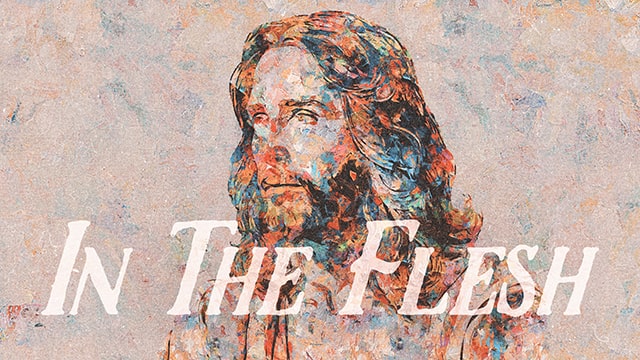


In The Flesh - John 6
Jesus's Miracles In the Bible Teach Us About Faith.
Emerson Kennedy
Jan 28, 2024 45m
Have you been wondering what the deeper meaning of Jesus's miracles is? Learn how the miracles in the Bible teach us more about our need for salvation and fulfillment through faith. When Jesus feeds the five thousand, He calls on us to remember that He is the bread of life. Video recorded at Indianapolis, Indiana.
Tags
miracles in the Bible miracles salvation sin redemption christian life living for christ godly life living a godly life life in the spirit being a good christian living with christ living for god worship Jesus church Jesus Christ praise and worship worship god christian what is worship praise worship together christian worshipMore From This Message
I want to begin by talking about the 72-year-old woman from Montgomery, Alabama. Every MLK Jr. day,
I read Letter from Birmingham Jail. This year, a line from that woman King quotes really resonated with
me. She uttered this line in response to the injustice she was enduring. She was choosing not to ride the
segregated buses. Someone asked her, “How do you do it? How do you not grow tired of all this?”
Here’s what she said: “My feets is tired, but my soul is rested.”
Could you imagine being in the segregated South, day in and day out, dealing with that—walking extra
miles because you’re trying to bring about justice? How do you have the resolve, especially as an older
woman, to keep going?
There’s another place where King describes what nourishes him, and what I suspect nourishes this 72-
year-old woman, in the face of all of that. King says that he is able to persist in the face of injustice
because he is sustained by Christianity’s “spiritual blessings,” the reality of the LIFE of God poured into
his heart, sustaining him through what must have felt like the 20th century equivalent of the Israelites
wandering in the wilderness, trying to enter the Promised Land of equal rights and freedom.
There are so many places we seek to find LIFE or rest for our souls, but here’s the question: where do you
go when your soul is tired just as much as your feet are? Are the places you go places where LIFE can be
found, or are they empty wells?
We’re in John 6 today and John is going to give his answer to that question. Look at how John starts:
“When they found him on the other side of the lake, they asked him, ‘Rabbi, when did you get here?’”
(John 6:25).
First, some context. At the beginning of John 6, Jesus is followed by over five thousand men, women, and
children. They’re hungry. Jesus takes a boy’s five loaves and two fish and multiplies them and feeds the
whole crowd! At that point, the people want to crown him king, but Jesus escapes and crosses over the
lake. That’s why at the beginning of our passage, the people were like, “Rabbi! When did you get here?”
Ok, let’s continue. “Jesus answered, ‘Very truly I tell you, you are looking for me, not because you saw
the signs I performed but because you ate the loaves and had your fill’” (John 6:26).
Pause again. Now we need the cultural context. You and I don’t look at food the same way people in
Jesus’ day did. For example, let me ask you three questions (from D.A. Carson).
First, if I were to ask your kids where food comes from, what would they say? The kids would probably
say something like, “Kroger!” or “Meijer!” But in the first century, everyone knew that food comes from
being farmed, from the earth, from plants and animals.
Second, what would you say if you were approached by one of our missionaries in India who had traveled
here, and they asked you, “What are the staples of the American diet?” In Jesus’ world there were two
main staples: bread and fish.
Third, why do we work? For us it’s to make money in order to buy stuff. In the first century, not so.
People worked in order to eat. God forbid a storm or catastrophe came and made it so their food perished,
their crops were destroyed, or they couldn’t work. Food was LIFE for people in Jesus’ day. (It is for us,
too; we just don’t ever think about it like they would.)
So, this is why the people are chasing after Jesus: he’s providing food, and food = LIFE!
Jesus continues, challenging the crowd. “‘Do not work for food that spoils, but for food that endures to
eternal life, which the Son of Man will give you. For on him God the Father has placed his seal of
approval’” (John 6:27). Jesus is saying, “As much as you want physical nourishment, there is a spiritual
nourishment you need even more.” Here’s then how the crowd responds: “Then they asked him, ‘What
must we do to do the works God requires?’ Jesus answered, ‘The work of God is this: to believe in the
one he has sent.’ So they asked him, ‘What sign then will you give that we may see it and believe you?
What will you do? Our ancestors at the manna in the wilderness; as it is written: “He gave them bread
from heaven to eat”’” (John 6:28-31).
Here we need Old Testament context. Most of you know that Israel was taken into slavery in Egypt. They
were there for 400 years. Then, God sent a Deliverer—Moses. Moses led them out of Egypt and to the
brink of the Promised Land. However, on their journey to the Promised Land, food was scarce. The
people hungered. The people were wondering, “What will we eat?” And God provided. He provided
manna from heaven every day. It nourished them and kept them alive, physical nourishment from the
hand of God.
Now look at how Jesus caps all this off: “Jesus said to them, ‘Very truly I tell you, it is not Moses who has
given you the bread from heaven, but it is my Father who gives you the true bread from heaven. For the
bread of God is the bread that comes down from heaven and gives life to the world.’ ‘Sir,’ they said,
‘always give us this bread’” (John 6:32-34).
And look at how Jesus finishes: “Then Jesus declared, ‘I am the bread of life’” (John 6:35).
MIC. DROP. Now, three things with all this:
Jesus is the manna of God come down from heaven
You know there are some people who are so associated with a brand or company or franchise that they
themselves ARE for all intents and purposes the brand or company or franchise.
Let’s test this theory. If I were to ask you who is the face of SpaceX, who would you say? (Elon Musk)
Who is the face of KFC? (Colonel Sanders). Who is the face of The Creek? If you said “Dan,” you failed
the test—it’s Jesus!
Here’s the point: Elon is so associated with SpaceX or Tesla for all intents and purposes he could say, “I
AM SpaceX or I AM Tesla.” Similarly, Colonel Sanders is SO associated with Kentucky Fried Chicken
that he could say, “I AM Kentucky Fried Chicken.”
Similarly but even more so, Jesus is here saying, “I am so congruent, so the same as, so identical to real,
soul-satisfying bread, nourishment for your soul, so similar to the manna that God the Father dropped out
of heaven to sustain the Israelites in the wilderness and brought them LIFE that I am now here, this day,
saying to you, crowd of people, ‘I AM THE BREAD OF LIFE.’”
Think with me about that for a second. Let me summarize some of this. Jesus has just fed over five
thousand people with bread and fish. Bread was huge in the ancient world: bread = LIFE. Jesus and the
people are talking about how at one point God sustained the people’s life with bread from heaven called
manna. And NOW Jesus says, “You know the bread that sustains you, brings you LIFE? I AM THAT
BREAD.”
I don’t really have an application for you on this point. I’m not trying to. My point with this point is that
none of this is about you. It’s about Jesus. It’s about who he is. External to what you think, external to
your life, your plans, your whatever, Jesus IS the manna of God come down from Heaven. But here’s
what I’ll add to that (and what we see as we continue our text).
Jesus is the manna of God come down from heaven who brings LIFE
Have you ever done a life audit in some way, shape, or form? It’s an exercise in which you look at your
life and ask, “What is it that brings me life?” and “What is it that drains me of life?”
I did one. Here’s a list of things that bring me life: family, literature, Steelers, Strangebird, exercising,
poetry, Sigur Ros, Gary Johnson sermons, church history, hiking, stars, good smelling candles,
Rembrandt, friends, worship.
I also did a “what-takes-the-life-out-of-me” audit: loud noises, not getting enough sleep, fast food, the
smell of pet stores, when people act like they know what they’re talking about, unagreed upon and
unrealistic expectations.
My point is this: love life! You love life. And you and I like NOT having life drained out of us!
Now, here’s the thing with Jesus: all of those things are great. But when I talk about the life that Jesus
brings, I’m not talking about what we talk about when we talk about stuff bringing us life/happiness. I’m
talking about a different kind of life.
Here’s what I mean. The Jews in Jesus’ day thought time was divided into two ages/eons: the present age
and the age to come. They thought of this present age as an age where there is sin, decay, and corruption
that would one day be replaced with a time when God would bring his justice, peace, and healing to the
world. It’s for this reason that Paul can write that the reason Jesus gave himself for our sins was “to rescue
us from the present evil age” (Galatians 1:14).
Now, I want us to THINK together. Imagine you’re in a Theology of God 101 class at a seminary. Get off
your phones (ha ha). Imagine you’re studying God and your young-but-wise-beyond-his-years 29-yearold professor, whom you think highly of, wants you to think about how God is the only one who can bring LIFE. He is LIFE’s Author, Sustainer, and Source. He is the Ground of all Being. Without God, there is no LIFE, only death. As your professor ponders that truth, this quote from DBH about God comes to mind:
The one infinite source of all that is: eternal, omniscient, omnipotent, omnipresent, uncreated,
uncaused, perfectly transcendent, of all things and for that very reason absolutely immanent to all
things…all things that exist receive their being continuously from him, who is the infinite
wellspring of all that is, in whom (to use the language of the Christian Scriptures) all things live
and move and have their being…He is the inexhaustible source of all reality, the absolute upon
which the contingent is always utterly dependent, the unity and simplicity that underlies and
sustains the diversity of finite and composite things…from whom we are, by whom we know and
are, and in whom we find our only true consummation.
Here’s the reality: God is life’s Author, Sustainer, and Source. And my sin, your sin, has separated us from
the life of God. And because we are separated, we are in the throes of Death.
But God is not content to leave you or me in that separation, in the “present evil age” as Paul says in
Galatians 1:14.
Look at what Jesus says: “Then Jesus declared, ‘I am the bread of life. Whoever comes to me will never
go hungry, and whoever believes in me will never be thirsty…For my Father’s will is that everyone who
looks to the Son and believes in him shall have eternal life, and I will raise them up at the last day’” (John
6: 35,40). You know what Jesus is saying here? He’s saying, “I have inaugurated the life of the age to
come. Just as the manna from heaven brought physical life, I am bringing LIFE to the world.’” He’s
saying, “I AM that life. Come to me. Believe in me and you will partake of that life!”
Now pause to consider the implication of that: the reality of that coming LIFE, experienced now in part,
and later in its fullness, helps us psychologically in the midst of our lives (this is the idea behind the
whole, “My feets is tired, but my soul is rested” thing). From that truth, we find spiritual sustenance. Our
souls can rest.
Jesus is the manna of God come down from Heaven who brings LIFE. Now, how do we get that LIFE?
Well, this leads to John’s last unveiling.
Jesus is the manna of God come down from heaven who brings life through his death
A couple weeks ago, I went to Bluebeard downtown. The dish I got was a Casarecce bolognese. But I had
this thought: everything in that dish had to lose its life for my life to go on. Think about it. The wheat lost
its life to make the pasta. The tomatoes lost their lives to make the sauce. The cow lost its life to make the
bolognese. You see my point, yes?
Everything we eat needs to die to bring us life. And even if it’s the highest quality, its provision for life is
very momentary! Not so with God. God’s life is eternal and infinite!
And think about this: none of the plants or animals that give up their lives so that you can eat them and
live do so willingly. In fact, there are many who protest (think Chick-fil-A’s slogan, “Eat More Chikin”).
So, Jesus is saying here: “Yes, I’m the bread of life. Yes, I’m bringing YOU that life. But the way it HAS
to be done is that I must GIVE UP my life so that you may have your life! And I’m willing.”
This is what Jesus is saying. Look with me:
• Look at verse 51: “‘I am the living bread that came down from heaven. Whoever eats this bread
will live forever. This bread is my flesh, which I will give for the life of the world.’”
• Look at verse 54: “‘Whoever eats my flesh and drinks my blood has eternal life, and I will raise
them up at the last day.’”
• Look at verse 57-58: “‘Just as the living Father sent me and I live because of the Father, so the
one who feeds on me will live because of me. This is the bread that came down from heaven.
Your ancestors ate manna and died, but whoever feeds on this bread will live forever.’”
For you and me to live, the Author of Life must give up his Life. And Jesus does, so that by his death, we
can live.
Jesus is the manna of God come down from heaven who brings life through his death.
Now, how do you access that life? Well, there’s two senses to this. There’s a sense in which we access it once for all time.
And in that sense, we simply follow Jesus’ words: we eat his flesh and drink his blood. We feed on him.
What does that mean? Well, he told us earlier: “‘The work of God is this: to believe in the one he has
sent.’” You access the life of God through believing in the one who brings that life. Without him, there is
no life.
But there’s also a sense in which we need to keep eating Jesus, keep drinking his blood, keep on
partaking. The best way that I know how that happens is to remind ourselves of God’s works, God’s
salvation, God’s Son by reading and digesting the Scriptures.
If you want the life of the age to come, you must come to the Author and Sustainer of Life. If you want to
be able to pull from the same spiritual resources that helped sustain MLK Jr. and that 72-year-old African
American woman from Montgomery, Alabama, and be able to say, “My feets is tired, but my soul is
rested” and mean it, you need the Bread of Life.
Jesus is the manna of God come down from heaven who brings life through his death.
Now, here’s how I’ll end: In one of CS Lewis’ Narnia books, The Silver Chair, a young girl, Jill Pole, has
entered a strange wood in the land of Narnia with her friend, Eustace Scrubb. Due to poor judgment, she
finds herself alone and separated from Eustace. She is very thirsty and is walking in search of water. She
finds a stream but stops dead in her tracks as it’s the stream of the lion Aslan and he’s in her path. She
stands frozen. Finally, Aslan the lion offers her a drink:
“Are you not thirsty?” said the Lion.
“I am dying of thirst,” said Jill.
“Then drink,” said the Lion.
“May I—could I—would you mind going away while I do?” said Jill.
The Lion answered this only by a look and a very low growl. And as Jill gazed at its motionless
bulk, she realized that she might as well have asked the whole mountain to move aside for her
convenience. The delicious rippling noise of the stream was driving her nearly frantic. “Will you
promise not to—do anything to me, if I do come?” said Jill. “I make no promise,” said the Lion.
Jill was so thirsty now that, without noticing it, she had come a step nearer. “Do you eat girls?”
she said.
“I have swallowed up girls and boys, women and men, kings and emperors, cities and realms,”
said the Lion. It didn’t say this as if it were boasting, nor as if it were sorry, nor as if it were
angry. It just said it.
“I daren’t come and drink,” said Jill.
“Then you will die of thirst,” said the Lion.
“Oh dear!” said Jill, coming another step nearer. “I suppose I must go and look for another stream
then.”
“There is no other stream,” said the Lion.
I love that. “There is no other stream.” Jesus is the manna of God come down from Heaven who
brings life through his death. The life of the age to come is here. It’s coming. There is life nowhere else.
Only in Christ Jesus.
I’ll leave you with the invitation of the prophet Isaiah when he speaks to Israel:
Come, all you who are thirsty, come to the waters; and you who have no money, come, buy and
eat! Come, but wine and milk without money and without cost. Why spend money on what is not
bread, and your labor on what does not satisfy. Listen, listen to me, and eat what is good, and you
will delight in the richest of fare. (Isaiah 55:1-2)
Recorded in Indianapolis, Indiana.
I read Letter from Birmingham Jail. This year, a line from that woman King quotes really resonated with
me. She uttered this line in response to the injustice she was enduring. She was choosing not to ride the
segregated buses. Someone asked her, “How do you do it? How do you not grow tired of all this?”
Here’s what she said: “My feets is tired, but my soul is rested.”
Could you imagine being in the segregated South, day in and day out, dealing with that—walking extra
miles because you’re trying to bring about justice? How do you have the resolve, especially as an older
woman, to keep going?
There’s another place where King describes what nourishes him, and what I suspect nourishes this 72-
year-old woman, in the face of all of that. King says that he is able to persist in the face of injustice
because he is sustained by Christianity’s “spiritual blessings,” the reality of the LIFE of God poured into
his heart, sustaining him through what must have felt like the 20th century equivalent of the Israelites
wandering in the wilderness, trying to enter the Promised Land of equal rights and freedom.
There are so many places we seek to find LIFE or rest for our souls, but here’s the question: where do you
go when your soul is tired just as much as your feet are? Are the places you go places where LIFE can be
found, or are they empty wells?
We’re in John 6 today and John is going to give his answer to that question. Look at how John starts:
“When they found him on the other side of the lake, they asked him, ‘Rabbi, when did you get here?’”
(John 6:25).
First, some context. At the beginning of John 6, Jesus is followed by over five thousand men, women, and
children. They’re hungry. Jesus takes a boy’s five loaves and two fish and multiplies them and feeds the
whole crowd! At that point, the people want to crown him king, but Jesus escapes and crosses over the
lake. That’s why at the beginning of our passage, the people were like, “Rabbi! When did you get here?”
Ok, let’s continue. “Jesus answered, ‘Very truly I tell you, you are looking for me, not because you saw
the signs I performed but because you ate the loaves and had your fill’” (John 6:26).
Pause again. Now we need the cultural context. You and I don’t look at food the same way people in
Jesus’ day did. For example, let me ask you three questions (from D.A. Carson).
First, if I were to ask your kids where food comes from, what would they say? The kids would probably
say something like, “Kroger!” or “Meijer!” But in the first century, everyone knew that food comes from
being farmed, from the earth, from plants and animals.
Second, what would you say if you were approached by one of our missionaries in India who had traveled
here, and they asked you, “What are the staples of the American diet?” In Jesus’ world there were two
main staples: bread and fish.
Third, why do we work? For us it’s to make money in order to buy stuff. In the first century, not so.
People worked in order to eat. God forbid a storm or catastrophe came and made it so their food perished,
their crops were destroyed, or they couldn’t work. Food was LIFE for people in Jesus’ day. (It is for us,
too; we just don’t ever think about it like they would.)
So, this is why the people are chasing after Jesus: he’s providing food, and food = LIFE!
Jesus continues, challenging the crowd. “‘Do not work for food that spoils, but for food that endures to
eternal life, which the Son of Man will give you. For on him God the Father has placed his seal of
approval’” (John 6:27). Jesus is saying, “As much as you want physical nourishment, there is a spiritual
nourishment you need even more.” Here’s then how the crowd responds: “Then they asked him, ‘What
must we do to do the works God requires?’ Jesus answered, ‘The work of God is this: to believe in the
one he has sent.’ So they asked him, ‘What sign then will you give that we may see it and believe you?
What will you do? Our ancestors at the manna in the wilderness; as it is written: “He gave them bread
from heaven to eat”’” (John 6:28-31).
Here we need Old Testament context. Most of you know that Israel was taken into slavery in Egypt. They
were there for 400 years. Then, God sent a Deliverer—Moses. Moses led them out of Egypt and to the
brink of the Promised Land. However, on their journey to the Promised Land, food was scarce. The
people hungered. The people were wondering, “What will we eat?” And God provided. He provided
manna from heaven every day. It nourished them and kept them alive, physical nourishment from the
hand of God.
Now look at how Jesus caps all this off: “Jesus said to them, ‘Very truly I tell you, it is not Moses who has
given you the bread from heaven, but it is my Father who gives you the true bread from heaven. For the
bread of God is the bread that comes down from heaven and gives life to the world.’ ‘Sir,’ they said,
‘always give us this bread’” (John 6:32-34).
And look at how Jesus finishes: “Then Jesus declared, ‘I am the bread of life’” (John 6:35).
MIC. DROP. Now, three things with all this:
Jesus is the manna of God come down from heaven
You know there are some people who are so associated with a brand or company or franchise that they
themselves ARE for all intents and purposes the brand or company or franchise.
Let’s test this theory. If I were to ask you who is the face of SpaceX, who would you say? (Elon Musk)
Who is the face of KFC? (Colonel Sanders). Who is the face of The Creek? If you said “Dan,” you failed
the test—it’s Jesus!
Here’s the point: Elon is so associated with SpaceX or Tesla for all intents and purposes he could say, “I
AM SpaceX or I AM Tesla.” Similarly, Colonel Sanders is SO associated with Kentucky Fried Chicken
that he could say, “I AM Kentucky Fried Chicken.”
Similarly but even more so, Jesus is here saying, “I am so congruent, so the same as, so identical to real,
soul-satisfying bread, nourishment for your soul, so similar to the manna that God the Father dropped out
of heaven to sustain the Israelites in the wilderness and brought them LIFE that I am now here, this day,
saying to you, crowd of people, ‘I AM THE BREAD OF LIFE.’”
Think with me about that for a second. Let me summarize some of this. Jesus has just fed over five
thousand people with bread and fish. Bread was huge in the ancient world: bread = LIFE. Jesus and the
people are talking about how at one point God sustained the people’s life with bread from heaven called
manna. And NOW Jesus says, “You know the bread that sustains you, brings you LIFE? I AM THAT
BREAD.”
I don’t really have an application for you on this point. I’m not trying to. My point with this point is that
none of this is about you. It’s about Jesus. It’s about who he is. External to what you think, external to
your life, your plans, your whatever, Jesus IS the manna of God come down from Heaven. But here’s
what I’ll add to that (and what we see as we continue our text).
Jesus is the manna of God come down from heaven who brings LIFE
Have you ever done a life audit in some way, shape, or form? It’s an exercise in which you look at your
life and ask, “What is it that brings me life?” and “What is it that drains me of life?”
I did one. Here’s a list of things that bring me life: family, literature, Steelers, Strangebird, exercising,
poetry, Sigur Ros, Gary Johnson sermons, church history, hiking, stars, good smelling candles,
Rembrandt, friends, worship.
I also did a “what-takes-the-life-out-of-me” audit: loud noises, not getting enough sleep, fast food, the
smell of pet stores, when people act like they know what they’re talking about, unagreed upon and
unrealistic expectations.
My point is this: love life! You love life. And you and I like NOT having life drained out of us!
Now, here’s the thing with Jesus: all of those things are great. But when I talk about the life that Jesus
brings, I’m not talking about what we talk about when we talk about stuff bringing us life/happiness. I’m
talking about a different kind of life.
Here’s what I mean. The Jews in Jesus’ day thought time was divided into two ages/eons: the present age
and the age to come. They thought of this present age as an age where there is sin, decay, and corruption
that would one day be replaced with a time when God would bring his justice, peace, and healing to the
world. It’s for this reason that Paul can write that the reason Jesus gave himself for our sins was “to rescue
us from the present evil age” (Galatians 1:14).
Now, I want us to THINK together. Imagine you’re in a Theology of God 101 class at a seminary. Get off
your phones (ha ha). Imagine you’re studying God and your young-but-wise-beyond-his-years 29-yearold professor, whom you think highly of, wants you to think about how God is the only one who can bring LIFE. He is LIFE’s Author, Sustainer, and Source. He is the Ground of all Being. Without God, there is no LIFE, only death. As your professor ponders that truth, this quote from DBH about God comes to mind:
The one infinite source of all that is: eternal, omniscient, omnipotent, omnipresent, uncreated,
uncaused, perfectly transcendent, of all things and for that very reason absolutely immanent to all
things…all things that exist receive their being continuously from him, who is the infinite
wellspring of all that is, in whom (to use the language of the Christian Scriptures) all things live
and move and have their being…He is the inexhaustible source of all reality, the absolute upon
which the contingent is always utterly dependent, the unity and simplicity that underlies and
sustains the diversity of finite and composite things…from whom we are, by whom we know and
are, and in whom we find our only true consummation.
Here’s the reality: God is life’s Author, Sustainer, and Source. And my sin, your sin, has separated us from
the life of God. And because we are separated, we are in the throes of Death.
But God is not content to leave you or me in that separation, in the “present evil age” as Paul says in
Galatians 1:14.
Look at what Jesus says: “Then Jesus declared, ‘I am the bread of life. Whoever comes to me will never
go hungry, and whoever believes in me will never be thirsty…For my Father’s will is that everyone who
looks to the Son and believes in him shall have eternal life, and I will raise them up at the last day’” (John
6: 35,40). You know what Jesus is saying here? He’s saying, “I have inaugurated the life of the age to
come. Just as the manna from heaven brought physical life, I am bringing LIFE to the world.’” He’s
saying, “I AM that life. Come to me. Believe in me and you will partake of that life!”
Now pause to consider the implication of that: the reality of that coming LIFE, experienced now in part,
and later in its fullness, helps us psychologically in the midst of our lives (this is the idea behind the
whole, “My feets is tired, but my soul is rested” thing). From that truth, we find spiritual sustenance. Our
souls can rest.
Jesus is the manna of God come down from Heaven who brings LIFE. Now, how do we get that LIFE?
Well, this leads to John’s last unveiling.
Jesus is the manna of God come down from heaven who brings life through his death
A couple weeks ago, I went to Bluebeard downtown. The dish I got was a Casarecce bolognese. But I had
this thought: everything in that dish had to lose its life for my life to go on. Think about it. The wheat lost
its life to make the pasta. The tomatoes lost their lives to make the sauce. The cow lost its life to make the
bolognese. You see my point, yes?
Everything we eat needs to die to bring us life. And even if it’s the highest quality, its provision for life is
very momentary! Not so with God. God’s life is eternal and infinite!
And think about this: none of the plants or animals that give up their lives so that you can eat them and
live do so willingly. In fact, there are many who protest (think Chick-fil-A’s slogan, “Eat More Chikin”).
So, Jesus is saying here: “Yes, I’m the bread of life. Yes, I’m bringing YOU that life. But the way it HAS
to be done is that I must GIVE UP my life so that you may have your life! And I’m willing.”
This is what Jesus is saying. Look with me:
• Look at verse 51: “‘I am the living bread that came down from heaven. Whoever eats this bread
will live forever. This bread is my flesh, which I will give for the life of the world.’”
• Look at verse 54: “‘Whoever eats my flesh and drinks my blood has eternal life, and I will raise
them up at the last day.’”
• Look at verse 57-58: “‘Just as the living Father sent me and I live because of the Father, so the
one who feeds on me will live because of me. This is the bread that came down from heaven.
Your ancestors ate manna and died, but whoever feeds on this bread will live forever.’”
For you and me to live, the Author of Life must give up his Life. And Jesus does, so that by his death, we
can live.
Jesus is the manna of God come down from heaven who brings life through his death.
Now, how do you access that life? Well, there’s two senses to this. There’s a sense in which we access it once for all time.
And in that sense, we simply follow Jesus’ words: we eat his flesh and drink his blood. We feed on him.
What does that mean? Well, he told us earlier: “‘The work of God is this: to believe in the one he has
sent.’” You access the life of God through believing in the one who brings that life. Without him, there is
no life.
But there’s also a sense in which we need to keep eating Jesus, keep drinking his blood, keep on
partaking. The best way that I know how that happens is to remind ourselves of God’s works, God’s
salvation, God’s Son by reading and digesting the Scriptures.
If you want the life of the age to come, you must come to the Author and Sustainer of Life. If you want to
be able to pull from the same spiritual resources that helped sustain MLK Jr. and that 72-year-old African
American woman from Montgomery, Alabama, and be able to say, “My feets is tired, but my soul is
rested” and mean it, you need the Bread of Life.
Jesus is the manna of God come down from heaven who brings life through his death.
Now, here’s how I’ll end: In one of CS Lewis’ Narnia books, The Silver Chair, a young girl, Jill Pole, has
entered a strange wood in the land of Narnia with her friend, Eustace Scrubb. Due to poor judgment, she
finds herself alone and separated from Eustace. She is very thirsty and is walking in search of water. She
finds a stream but stops dead in her tracks as it’s the stream of the lion Aslan and he’s in her path. She
stands frozen. Finally, Aslan the lion offers her a drink:
“Are you not thirsty?” said the Lion.
“I am dying of thirst,” said Jill.
“Then drink,” said the Lion.
“May I—could I—would you mind going away while I do?” said Jill.
The Lion answered this only by a look and a very low growl. And as Jill gazed at its motionless
bulk, she realized that she might as well have asked the whole mountain to move aside for her
convenience. The delicious rippling noise of the stream was driving her nearly frantic. “Will you
promise not to—do anything to me, if I do come?” said Jill. “I make no promise,” said the Lion.
Jill was so thirsty now that, without noticing it, she had come a step nearer. “Do you eat girls?”
she said.
“I have swallowed up girls and boys, women and men, kings and emperors, cities and realms,”
said the Lion. It didn’t say this as if it were boasting, nor as if it were sorry, nor as if it were
angry. It just said it.
“I daren’t come and drink,” said Jill.
“Then you will die of thirst,” said the Lion.
“Oh dear!” said Jill, coming another step nearer. “I suppose I must go and look for another stream
then.”
“There is no other stream,” said the Lion.
I love that. “There is no other stream.” Jesus is the manna of God come down from Heaven who
brings life through his death. The life of the age to come is here. It’s coming. There is life nowhere else.
Only in Christ Jesus.
I’ll leave you with the invitation of the prophet Isaiah when he speaks to Israel:
Come, all you who are thirsty, come to the waters; and you who have no money, come, buy and
eat! Come, but wine and milk without money and without cost. Why spend money on what is not
bread, and your labor on what does not satisfy. Listen, listen to me, and eat what is good, and you
will delight in the richest of fare. (Isaiah 55:1-2)
Recorded in Indianapolis, Indiana.
Read More